Our craft · Bankura, West Bengal, India
A note raised by hand.
The instruments are not pressed from rolled sheet. Metal is melted, cast as a blank, brought up to forging heat and opened by hammer — returned to the fire as it hardens, and worked through cycle after cycle until base, wall and rim take shape.
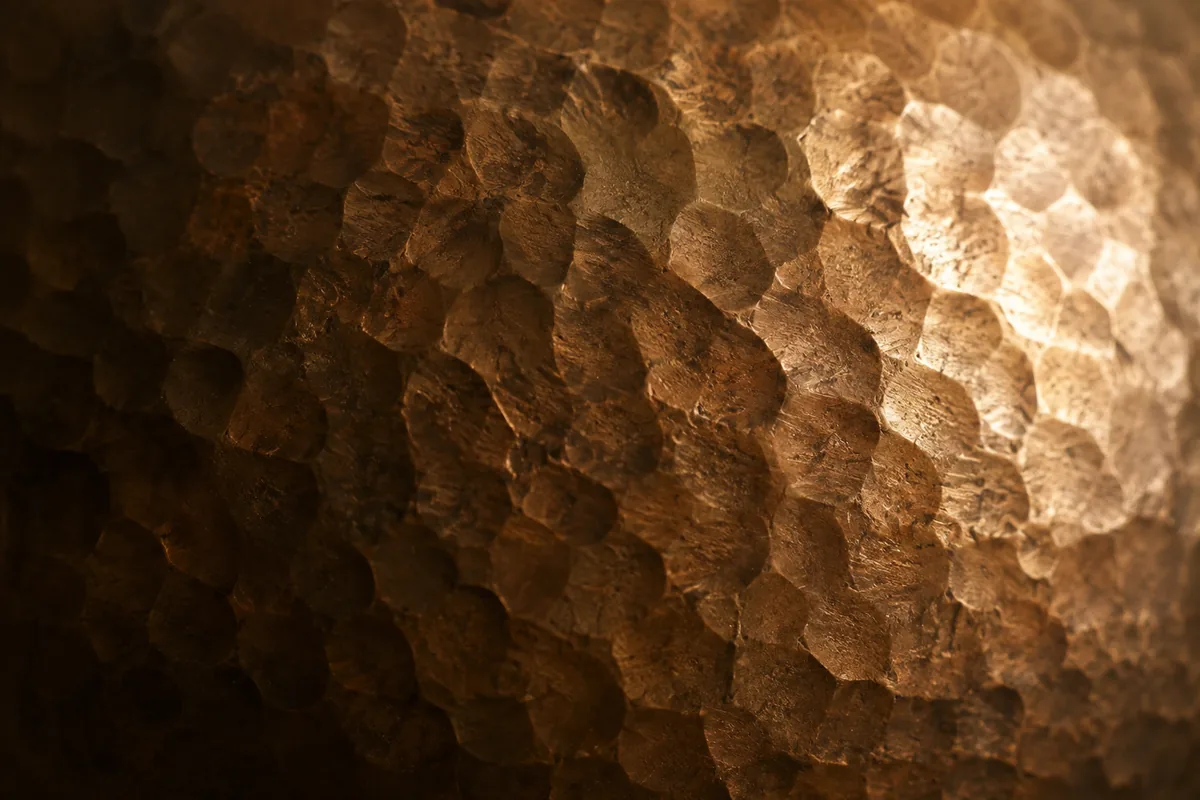
Material
Bell metal as material.
ANURAVA instruments are made from bell metal — a copper-and-tin alloy, hard and bright, and unforgiving to work. It must be shaped within a narrow band of heat, which is why the craft stays in experienced hands.
Seven stages
From fire to resonance.
- 01
Alloy prepared
Bell metal — a copper-and-tin alloy — is prepared for forming.
- 02
Blank cast
The alloy is cast as a blank ready for forging.
- 03
Blank heated
The blank is brought up to working heat so it can be shaped.
- 04
Shape raised by hammering
Cycles of heating and hammering raise the wall and set the proportions.
- 05
Rim and form trued
The rim and form are trued — a stage that strongly affects how the instrument speaks.
- 06
Surface finished
The surface is polished or fine-abraded to the chosen finish.
- 07
Inspected and heard
The finished instrument is struck and rim-played, and considered for response before it is accepted.
Variation
Variation is information, not inconsistency.
Small differences in wall thickness, weight, curvature, rim profile and hammering all bear on tone, overtone separation and sustain. Two handmade instruments of the same nominal diameter may respond differently — so we describe the piece, not only the family.